Tabitha's Jewellery Blog
All you ever wanted to know about jewellery and how its made!
What Is Dichroic Glass? A Silversmith's Guide to the Most Magical Material in Jewellery
By Tabitha Tansey | Published October 2026
People often stop at my stall and pick up one of my glass pieces with a look of genuine puzzlement. They tilt it one way, then the other, watching the colour shift from gold to green to deep teal — sometimes in the space of a single movement. Then they ask the question I love answering: "What on earth is this?"
The answer is dichroic glass. And once you understand what it is and how it's made, I think you'll find it just as remarkable as I do.

What Does "Dichroic" Actually Mean?
The word comes from the Greek dikhroos — meaning "two colours." And that's exactly what dichroic glass does: it shows two distinct colours depending on the angle you view it from and the light it's in. Hold a piece in transmitted light (light passing through it) and you might see a warm gold. Look at it in reflected light, and it shifts to a cool blue-green. Turn it in your hand and the whole palette moves with you.
That colour-shifting quality is the reason dichroic glass jewellery is so hard to describe in a photograph — and so easy to fall in love with in person.
How Is Dichroic Glass Made?
Dichroic glass was originally developed by NASA for use in satellite mirrors and aerospace equipment. The glass is coated with ultra-thin layers of metallic oxides — often titanium, chromium, or silicon — in a vacuum chamber at high temperature. These microscopic layers refract and reflect light at different wavelengths, which is what creates that iridescent, colour-shifting effect.
The result is glass that looks almost alive. Even small off-cuts are completely unique — no two pieces ever catch the light in exactly the same way.
When I came to work with it in my own studio, that uniqueness was exactly what drew me in.
How I Use Dichroic Glass in My Jewellery
I work with dichroic glass using a technique called kiln-formed or fused glass. I cut pieces of dichroic glass and layer them with other compatible glasses before firing them in my kiln. The heat fuses them together, and depending on the temperature and the specific glasses involved, you get different results — bubbles, textures, pooling, colour bleed. Every firing is a small experiment.
After the glass comes out of the kiln — once it's cooled, carefully — I set it into sterling silver.
That's the part I find genuinely exciting: I can make the same basic shape twenty times, with the same firing schedule, and end up with twenty completely different pendants.
What Makes Dichroic Glass Jewellery Special?
There are a few things that set dichroic glass jewellery apart from other handmade pieces: It changes with the light. Natural daylight, candlelight, lamplight — dichroic glass behaves differently in all of them. Wearing a piece can feel like wearing a different colour at different times of day.
Every piece is one-of-a-kind. Because the glass varies even within the same sheet, and because the kiln process introduces its own variation, it is genuinely impossible to make two identical pieces. The one you buy is the only one like it in the world.
The colours run deep. Dichroic glass isn't painted or dyed — the colour is in the coating itself, fused at the molecular level. It doesn't fade. It doesn't scratch off. It lasts.
It pairs beautifully with silver. Sterling silver has a clean, neutral quality that lets the glass do the talking.
The Glass Pieces in My Collection
My Silver and Glass Collection includes pendants, earrings, and occasionally brooches, all set in sterling silver. I work with a range of dichroic colourways — golds, teals, pinks, purples, electric blues — and every piece is presented in a jewellery box, posted with care, and arrives ready to wear or give as a gift.
If you're buying as a gift, I'd gently suggest leaning toward the warmer tones (gold, rose, amber) for someone who tends toward silver and gold jewellery — or the cooler electric shades (teal, blue-green, violet) for someone who loves a statement colour.
But honestly? The best way to choose is to look at each piece and wait for the one that you can't stop picking up.
A Note on Natural Variation
Because every piece of dichroic glass jewellery I make is genuinely handmade there will always be small variations that photographs can't fully capture. The colour you see on screen may shift slightly depending on your device, the ambient light in the photograph, and of course the light in your own home. This isn't a flaw; it's the nature of the material. I think it's also part of the charm.
If you ever want to know more about a specific piece before buying — how it looks in different lights, what size it actually is in the hand — please just ask. I'm happy to send an extra photograph or answer any questions at all.
Explore the Silver and Glass Collection
If you'd like to see my dichroic glass jewellery in sterling silver — pendants, earrings, and more — browse the Silver and Glass Collection here
Each piece is handmade in my studio in rural North Shropshire, posted with care, and comes with postage included.
*Tabitha Tansey is an award-winning glass artist and silversmith based in North Shropshire. She holds a BA (Hons) in Applied Art and an MA specialising in Glass from Glyndwr University, and continues her professional training at the Jewellers Academy.*
-
A small Tree of Life bracelet
Regular price £25.00 GBPRegular priceUnit price per -
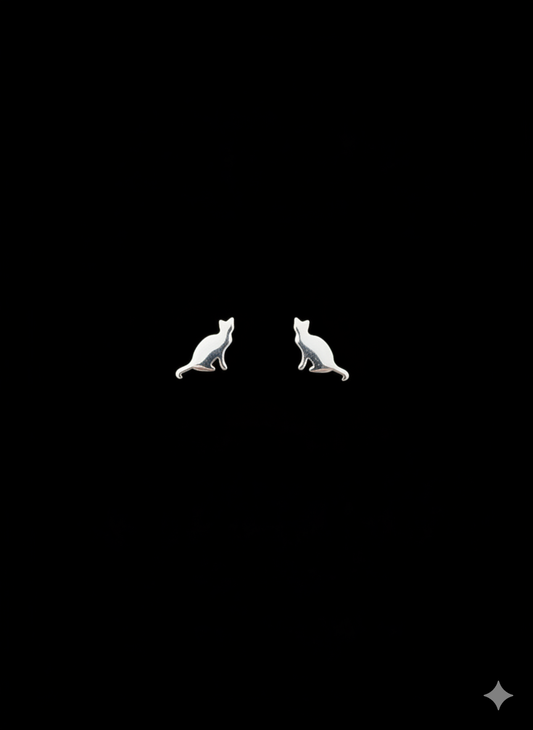
Cat Stud Earrings
Regular price £20.00 GBPRegular priceUnit price per -
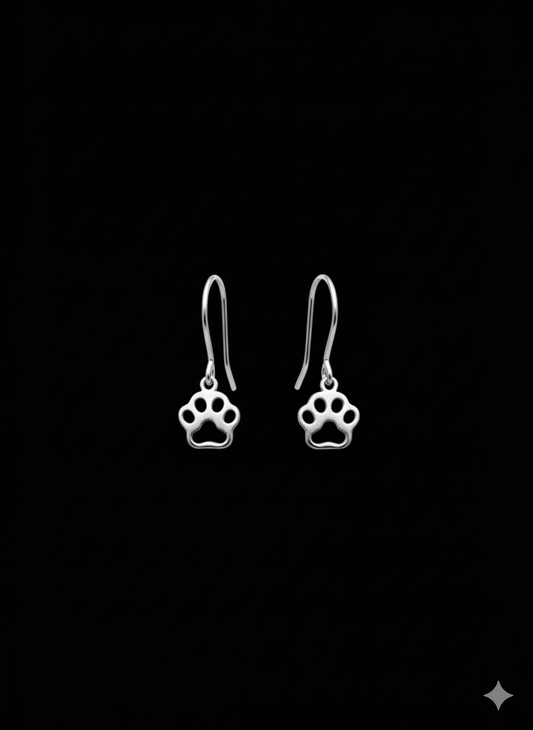
Paw Print Drop Earrings
Regular price £25.00 GBPRegular priceUnit price per -
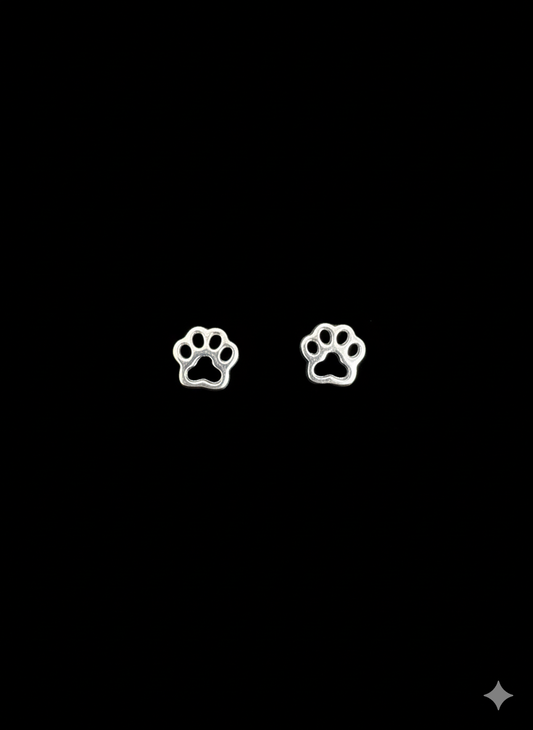
Paw Print Studs
Regular price £20.00 GBPRegular priceUnit price per